Short answer, then the reasons
Yes. A sealed gas insert should vent through its own liner that runs from the unit to the top of the chimney. Most insert makers write that into their installation manuals, and in Lawndale it is the first thing we look for when someone asks us to service an insert that was fitted years ago. Plenty of older installs skipped it. Here is why that matters, what the liner is, and how the cost works out.
Why the old flue cannot do the job alone
A brick chimney built for wood was sized for a wood fire: a big opening, a big flue and hot smoke that rises fast. An insert puts out far less exhaust, and much cooler exhaust, through a small collar on top of the unit. Send that into a wide clay flue and three things go wrong.
The draft is weak. Cool gas in a wide shaft drifts instead of rising. On a calm night the exhaust can hang in the flue or spill back toward the room.
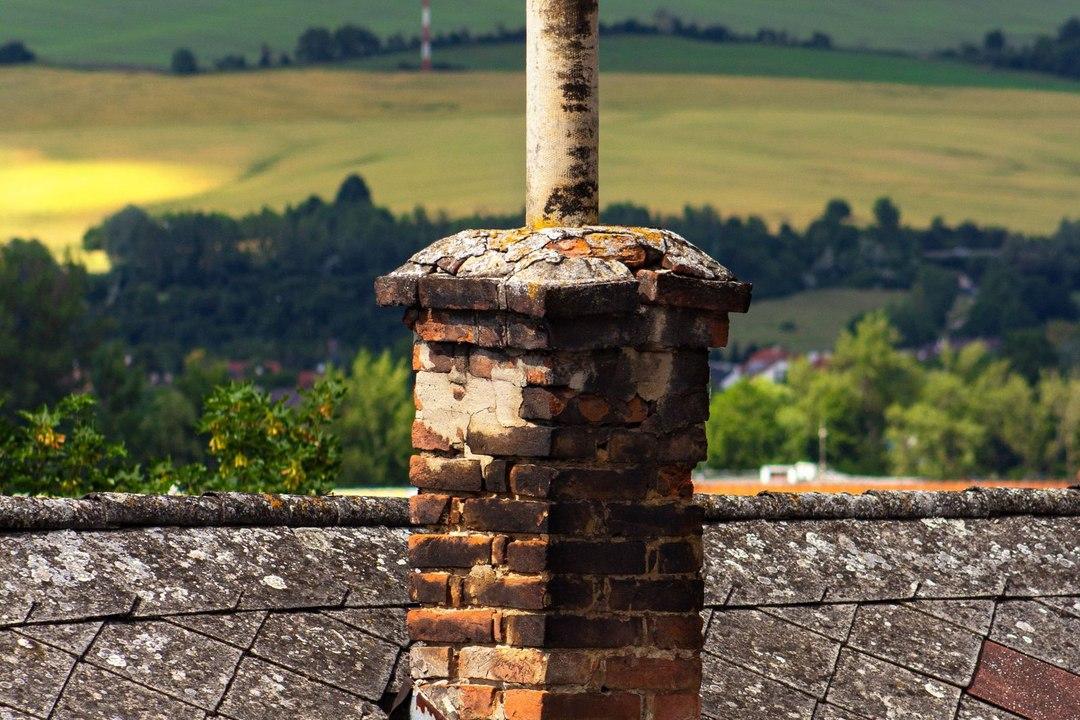
Water collects. Burning natural gas makes a lot of water vapor. In a cold, oversized flue it condenses on the clay, soaks into the mortar joints and, over time, crumbles them. We see the results as flaking tile and stained brick at the top of the stack.
The flue may already be damaged. Clay tile in older Los Angeles County chimneys has been through decades of heat and more than one strong quake. Cracks and open joints that were tolerable for wood smoke are not where you want a gas appliance's exhaust.
A liner sized to the insert fixes all three. It keeps the exhaust in a narrow, smooth path, it warms up quickly, and it carries water and gas out the top instead of into the brick.
The quick installs we still find
Some inserts from past decades were fitted with only a short length of pipe, or none at all, and simply pushed into the opening. The exhaust went straight into the smoke chamber and found its own way up. These setups often run for years without an obvious problem, which is why owners are surprised when a buyer's inspector or a service visit flags one. If you have an insert and nobody can tell you whether it has a liner, a look from the roof usually settles it in a minute.
What goes up the chimney
For a gas insert, the liner is usually flexible stainless steel, sized to the collar on the unit. Many modern inserts are direct vent, which means they need two paths: one carrying exhaust out and one bringing outdoor air in to the burner. That can be two separate liners side by side or one pipe nested inside another, depending on the model. Both end in a cap made for that termination.
Where the old cast iron damper plate stands in the path, we take the plate out so the pipe can run straight. At the top, a plate closes the gap between the liner and the old flue so rain and birds cannot get down it.
What decides the cost
When the liner is part of a new insert, it sits inside our installed range of $2,750 to $5,550. Taller chimneys and two-pipe direct vent models push toward the upper end.
When an existing insert needs a liner added, or an old one replaced, the job has no single published price. We measure the height of the chimney, check the flue size and the path past the smoke chamber, and look at the top of the stack. Then the figure goes on paper before any work starts. To set that visit up, request a liner check on the quote form and include the make of the insert if you know it and roughly how long it has been in. We may ask a couple of follow up questions when we call back.
When the chimney needs more than a liner
A liner does not hold up a chimney or keep rain off it. If the crown at the top is split, the top courses of brick are loose, or there is no cap, those repairs come before or alongside the liner. Our crown repair page and chimney cap page explain those jobs. A camera inspection beforehand, a Level 2 at $390, shows what the flue looks like inside if the chimney has not been looked at in a while.
Liners for other gas setups
A log set does not use a liner. It vents through the open flue, so that flue has to be sound in its own right. A wall unit does not use the chimney at all. If you are still weighing those options, our comparison post sets them side by side. For an insert, though, the liner is not optional extra hardware. It is part of the appliance.
What an unlined insert costs you over time
Skipping the liner rarely shows up as one dramatic failure. It shows up slowly: a pilot that is fussy on still nights, a faint smell when the unit first fires, mortar dust collecting on top of the insert, glass that sooted up sooner than it should. Over several winters, the water from the exhaust works on the top of the chimney, and a liner job turns into a liner plus masonry job. Adding the liner early keeps the bill to the liner.
Where to read more
Our liner installation page covers lining for wood stoves and furnaces as well as gas inserts. If you are planning a new insert, our post on insert pricing walks through the rest of the installed figure.
Not sure what is up there?
Most owners in Lawndale with an older insert have no idea whether it was lined. Finding out takes one short visit. Start on the contact page with the address and what kind of insert you have.
Weighing a Move Off Wood?
Mulligan Chimney Works looks at the flue first, then sets gas logs, an insert and a direct-vent unit side by side for your room. Visits run from Lawndale to Hawthorne, Inglewood, Carson and the rest of the South Bay.